Can a Chimney Cap Stop Water Leaks and Animal Problems?
Table of Contents
A chimney cap can help stop many water leaks and animal problems by covering the open top of the chimney flue. In Nassau County, homes deal with Long Island rain, salt air, wind, and winter moisture. When the chimney is uncapped, water, leaves, squirrels, raccoons, birds, and nesting material can enter the chimney system. That can lead to water intrusion, animal intrusions, unpleasant odors, creosote buildup, poor air quality, and structural damage. Certified Chimney Solutions provides local chimney cap installation and chimney repair services for homeowners across Nassau County and Long Island.
What a Chimney Cap Does
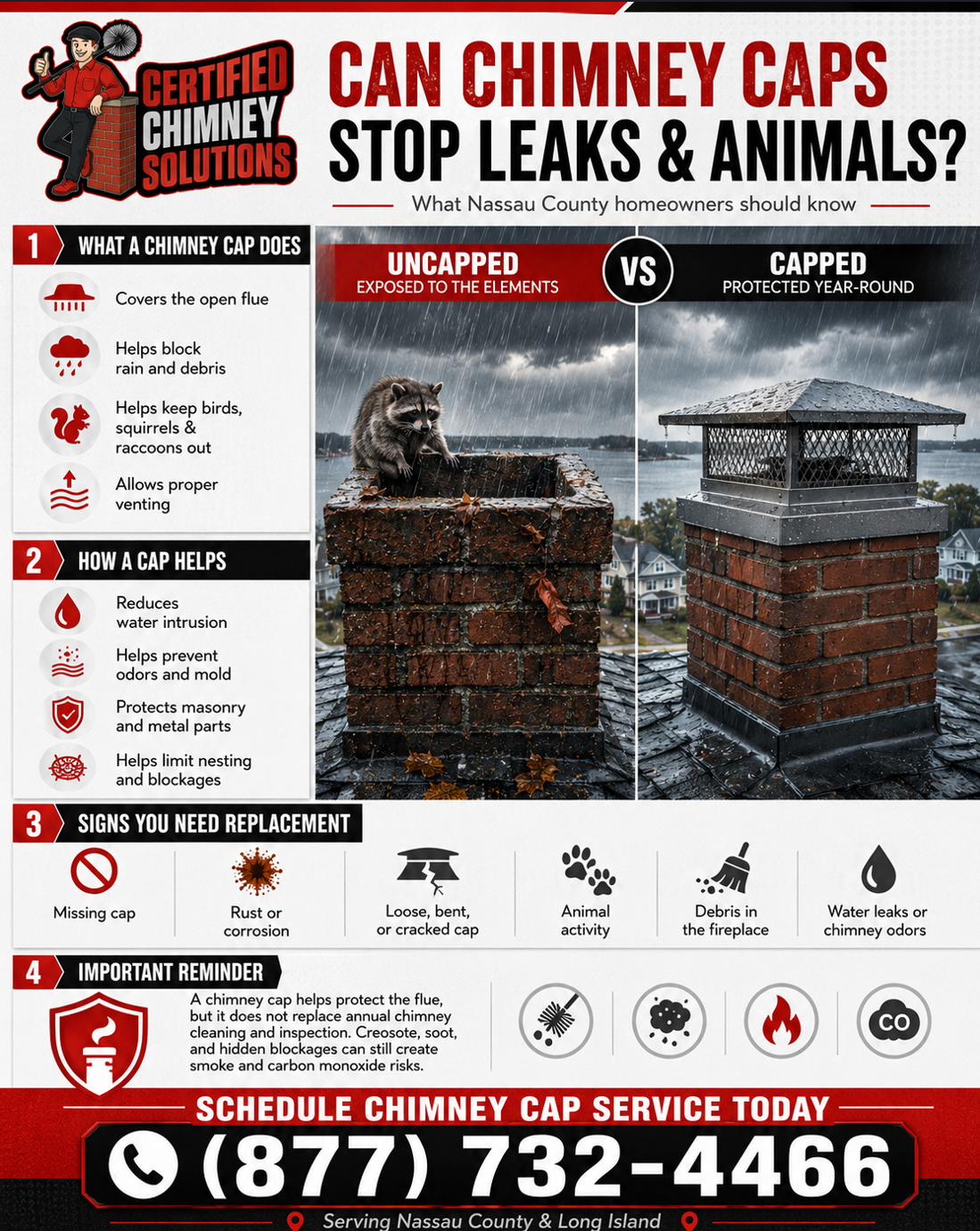
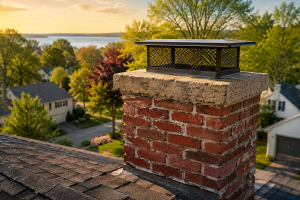
A chimney cap sits over the chimney opening and helps protect the flue from outside elements. It is designed to reduce rain entry, block debris, and limit animal access while still allowing smoke and gases to vent. Many caps also include stainless steel mesh that can help keep animals out and act as a spark arrestor. This matters because the chimney flue needs to stay clear for proper draft and safer fireplace use. A missing or damaged cap can allow small problems to enter from the top and spread through the complete chimney system.
How Chimney Caps Help Stop Water Leaks
A chimney cap helps stop water leaks by reducing how much rain and snow enter the flue. Without a cap, water can run down into the smoke chamber, fireplace, damper area, and masonry. Over time, this can create water stains, mold growth, chimney odors, and moisture problems inside the home. On Long Island, coastal storms and wind-driven rain can push water into open chimneys more often. A cap does not fix every leaky chimney, but it is often one of the first parts checked during a chimney leak inspection.
Water Intrusion and Masonry Damage
Water intrusion can damage brick, mortar, metal fireboxes, and chimney chase covers when it is not corrected. Moisture enters the chimney, then sits inside porous masonry and metal parts. During cold weather, that trapped water can freeze, expand, and cause brick or mortar deterioration. Over time, the chimney may need masonry repair, chimney rebuilding, water-resistant sealant, or larger restoration work. The Chimney Safety Institute of America explains that a well-designed chimney cap helps keep rainwater out while also helping prevent birds and animals from nesting in the chimney.
Can a Chimney Cap Stop Animal Problems?
A chimney cap can help stop many animal problems by closing off the open flue with a protective top and screen. Birds, squirrels, and raccoons may enter an uncapped chimney looking for shelter, warmth, or a nesting spot. Once inside, animal nests and nesting material can block airflow and create chimney odors. Animal presence may also leave waste, fleas, or other cleanup concerns behind. A cap helps prevent future entry after humane animal removal has been completed. This makes chimney cap installation an important step in chimney animal remediation.
Is Chimney Cleaning Needed After Wildlife Removal?
Chimney cleaning is usually recommended after wildlife removal because animals can leave nests, droppings, hair, and debris inside the flue. These materials can create unpleasant odors, respiratory hazards, and draft problems if they remain inside the chimney. Cleaning after wildlife removal also helps remove ash and soot so the technician can check for hidden damage. If the animal activity caused blockages or moisture problems, a chimney inspection may be needed before the fireplace is used again. Professional chimney cleaning helps restore safer airflow and reduces the chance of lingering odors inside the home.
Fire Safety, Creosote Buildup, and Blocked Flues
A chimney cap helps protect the flue, but it does not replace chimney cleaning or routine chimney inspections. Creosote buildup, ash, soot, and debris can still collect inside the chimney with normal fireplace use. If animal nests or leaves are added to that buildup, the risk of fireplace fires and smoke problems can increase. The National Fire Protection Association publishes fire safety resources and standards related to chimneys, fireplaces, vents, and heating systems. Regular service helps find chimney problems before they become fire hazards or ventilation issues.
Carbon Monoxide and Air Quality Concerns
Carbon monoxide and air quality concerns can happen when the chimney flue is blocked or does not draft correctly. Animal nests, debris, creosote buildup, and damaged chimney caps can all affect how smoke and gases leave the home. The CDC warns that blocked chimneys can allow carbon monoxide to build up indoors. This is why carbon monoxide alarms, chimney inspections, and proper fireplace service all matter. A cap helps reduce outside blockages, but the chimney still needs regular care to keep the system working safely.
Signs Your Chimney Cap Needs Replacement
Your chimney cap may need replacement if it is missing, rusted, loose, bent, cracked, or pulling away from the chimney top. You may also notice water leaks, animal activity, chimney odors, or debris in the fireplace. These are strong signs that the cap is no longer protecting the chimney the way it should. Chimney cap replacement may also be needed when mesh is damaged or when the cap does not fit the flue correctly. A professional chimney inspection can confirm whether cap replacement, chimney chase cover repair, or masonry work is needed.
Schedule Chimney Cap Service in Nassau County
Certified Chimney Solutions is a family-owned company providing chimney cap installation, chimney cap replacement, chimney cleaning, chimney inspection, chimney animal removal services, humane animal removal coordination, chimney rebuilding, fireplace service, and related chimney services across Nassau County and Long Island. Homeowners should schedule service if they see water leaks, animal intrusions, mold growth, chimney odors, or signs of structural damage. The EPA Burn Wise program explains that wood smoke can affect health and air quality, which makes safe venting important. Call Certified Chimney Solutions at 877-732-4466 to request chimney cap service.
Schedule Free Estimate Now!
Free Estimates for residential & commercial