Best Time of Year to Repair a Chimney in Nassau County
Table of Contents
The best time to repair a chimney in Nassau County is usually spring, summer, or early fall. These seasons give chimney materials more stable weather for masonry repairs, chimney cap installation, chimney liner work, and leak fixes. Long Island homes deal with salt air, winter moisture, and strong seasonal temperature changes, especially near Port Washington, Long Island Sound, and the South Shore. When chimney damage is left until winter, water damage can spread and repair schedules can become harder to manage. Certified Chimney Solutions provides local chimney repair and maintenance services across Nassau County and Long Island.
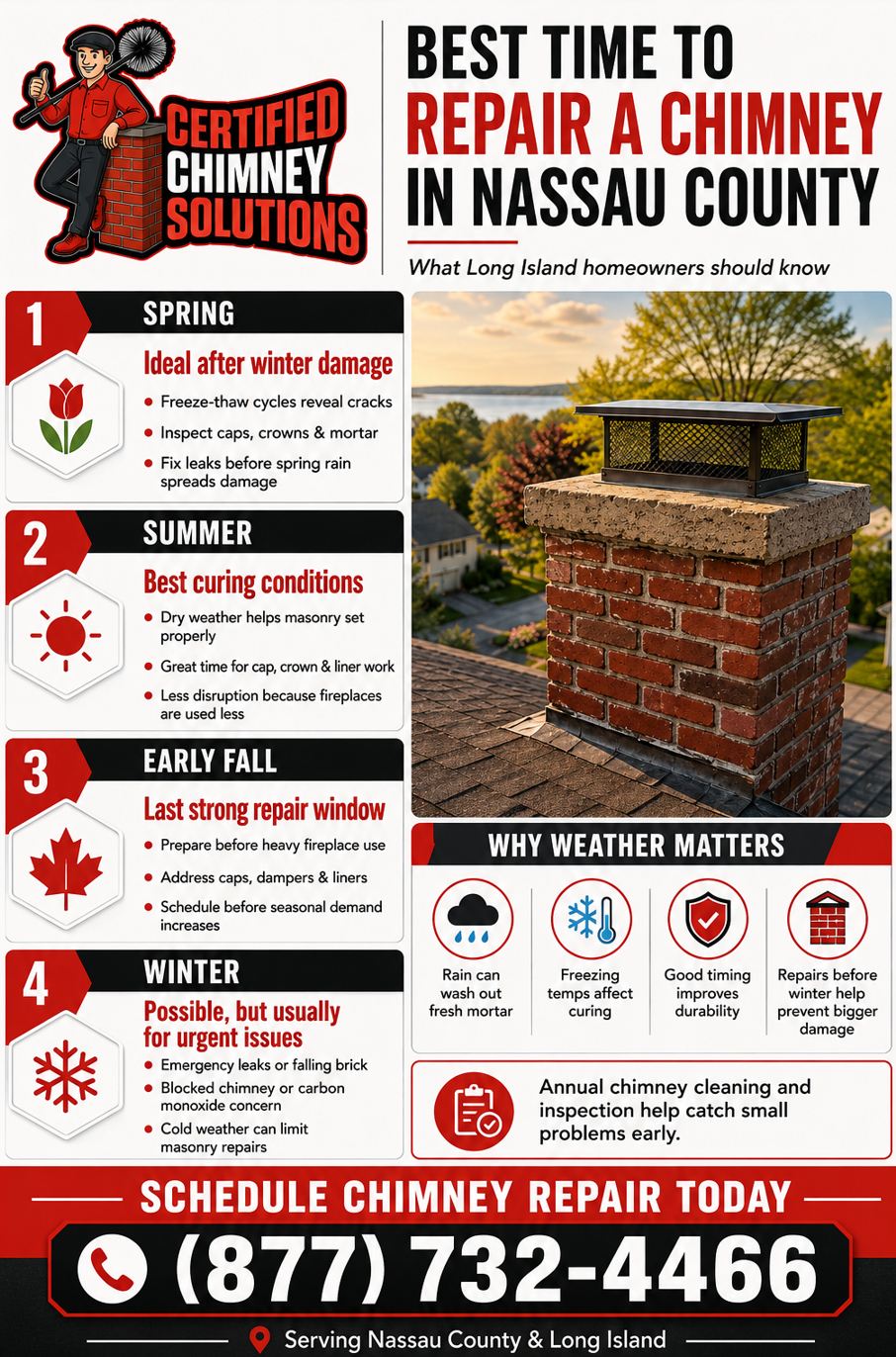
Spring Is Ideal After Winter Damage
Spring is a smart time for chimney service because winter often reveals hidden problems. Freeze-thaw cycles can crack mortar, loosen chimney caps, and weaken the chimney crown. Once the weather warms up, skilled technicians can check the chimney structure, smoke chamber, fireplace dampers, chimney walls, and masonry joints more clearly. If repairs are delayed, moisture issues can continue through spring rain and lead to costly deterioration. A spring service appointment gives homeowners time to fix damage before the next heating season and helps protect the structural integrity of the chimney system.
Summer Gives Repairs Time to Cure
Summer is often the easiest season for masonry repairs because dry, warm weather helps repair materials cure properly. Chimney durability depends on good preparation, proper materials, and enough time for mortar, sealants, and waterproofing work to set. If the chimney needs cap and crown repairs, replacement services, or chimney liner installation services, summer weather can make scheduling easier. Nassau County homeowners also use fireplaces less during summer, so repair work is less disruptive. This makes summer a practical time to handle leak fixes, relining options, and maintenance services before cold weather returns.
Why Weather Matters for Masonry Work
Weather matters because masonry needs the right conditions to bond and cure. Too much rain can wash out fresh mortar, while freezing temperatures can stop materials from setting correctly. Long Island’s winter moisture, coastal air, and sudden storms can shorten the life of poor repairs. When masonry work is completed during better weather, the chimney has a stronger chance of staying durable. This matters for brick damage, chimney crown repair, mortar restoration, and waterproofing. Good timing supports a reliable chimney and helps reduce future energy costs tied to poor ventilation or heat loss.
Early Fall Is the Last Safe Window
Early fall is the last strong window for chimney repair before heavy fireplace use begins. Homeowners often start thinking about heat, energy costs, and fireplace performance when evenings get cooler. If the chimney has water damage, a damaged cap, weak damper options, or a worn stainless steel liner, fall repairs can help restore safer use. Waiting until late fall or winter may limit repair options because weather and demand can slow scheduling. A fall chimney clean and inspection helps confirm that the chimney system is ready for seasonal heating.
Do You Handle Chimney Repairs During Winter?
Winter chimney repairs can be done in some cases, but they are not always ideal. Emergency repairs may be needed when there is active leaking, carbon monoxide concern, falling brick, or a blocked chimney. The issue is that winter weather can make masonry work harder and may limit the materials that can be used safely. Snow, ice, and cold temperatures can also make roof access more difficult. If the problem is not urgent, many homeowners are better off scheduling repairs before winter starts so the chimney is ready for regular use.
Chimney Liners and Relining Timing
Chimney liners play a crucial role in efficient ventilation, fire safety, and heating performance. A stainless steel liner or professional chimney relining service may be needed when the existing liner is cracked, damaged, or no longer sized correctly for the heating system. Timely relining helps move smoke and gases out of the home while protecting chimney walls from heat transfer and acidic residue. The National Fire Protection Association publishes standards for chimneys, fireplaces, vents, and solid fuel-burning appliances. Scheduling relining before winter helps support optimal performance during the season of highest use.
Chimney Caps, Dampers, and Energy Efficiency
Chimney caps and dampers are small parts that can make a big difference in chimney performance. A high-quality chimney cap installation helps block rain, animals, leaves, and external elements from entering the flue. A secure fit also helps reduce moisture problems and protect the chimney life. Fireplace dampers help create a better seal when the fireplace is not in use, which may reduce heat loss. If a damper is damaged or loose, expert fireplace damper installation or reliable damper service can help support heating efficiency and comfort inside the home.
How Often Should You Get a Chimney Cleaned?
Most homeowners should schedule chimney cleaning and inspection at least once a year. The Chimney Safety Institute of America provides homeowner resources that support regular chimney care and safer venting. A chimney clean helps remove soot, creosote, and debris before they affect draft or fire safety. It also gives technicians a better view of essential components like the smoke chamber, chimney liners, chimney caps, and fireplace dampers. Regular maintenance can prevent small problems from becoming costly repairs and helps keep the chimney system working more safely during colder months.
Signs Your Chimney Needs Repairs
Your chimney may need repair if you notice water stains, loose brick, cracked mortar, rust, smoke backup, odors, or pieces of masonry near the fireplace. These signs can point to moisture issues, damaged caps, liner problems, or a weak chimney crown. If ignored, small defects can spread into structural problems and costly deterioration. The U.S. Fire Administration provides home fire prevention resources that remind homeowners to take fire safety seriously. A chimney inspection helps identify whether you need masonry repairs, relining, cap work, or other replacement services.
Schedule Chimney Repair in Nassau County
Certified Chimney Solutions provides chimney service, chimney cleaning, chimney liners, chimney caps, chimney liner installation, stainless steel liner work, reliable relining services, chimney cap solutions, damper service, masonry repairs, dryer vent cleaning, and maintenance services across Nassau County, Long Island, and nearby Suffolk County. Homeowners should schedule a service appointment in spring, summer, or early fall when possible. This gives the chimney the best chance to be repaired before winter weather and seasonal heating return. Call Certified Chimney Solutions at 877-732-4466 to request a free estimate from skilled technicians committed to customer satisfaction.
Schedule Free Estimate Now!
Free Estimates for residential & commercial