What Causes Chimney Leaks in Nassau County Homes?
Table of Contents
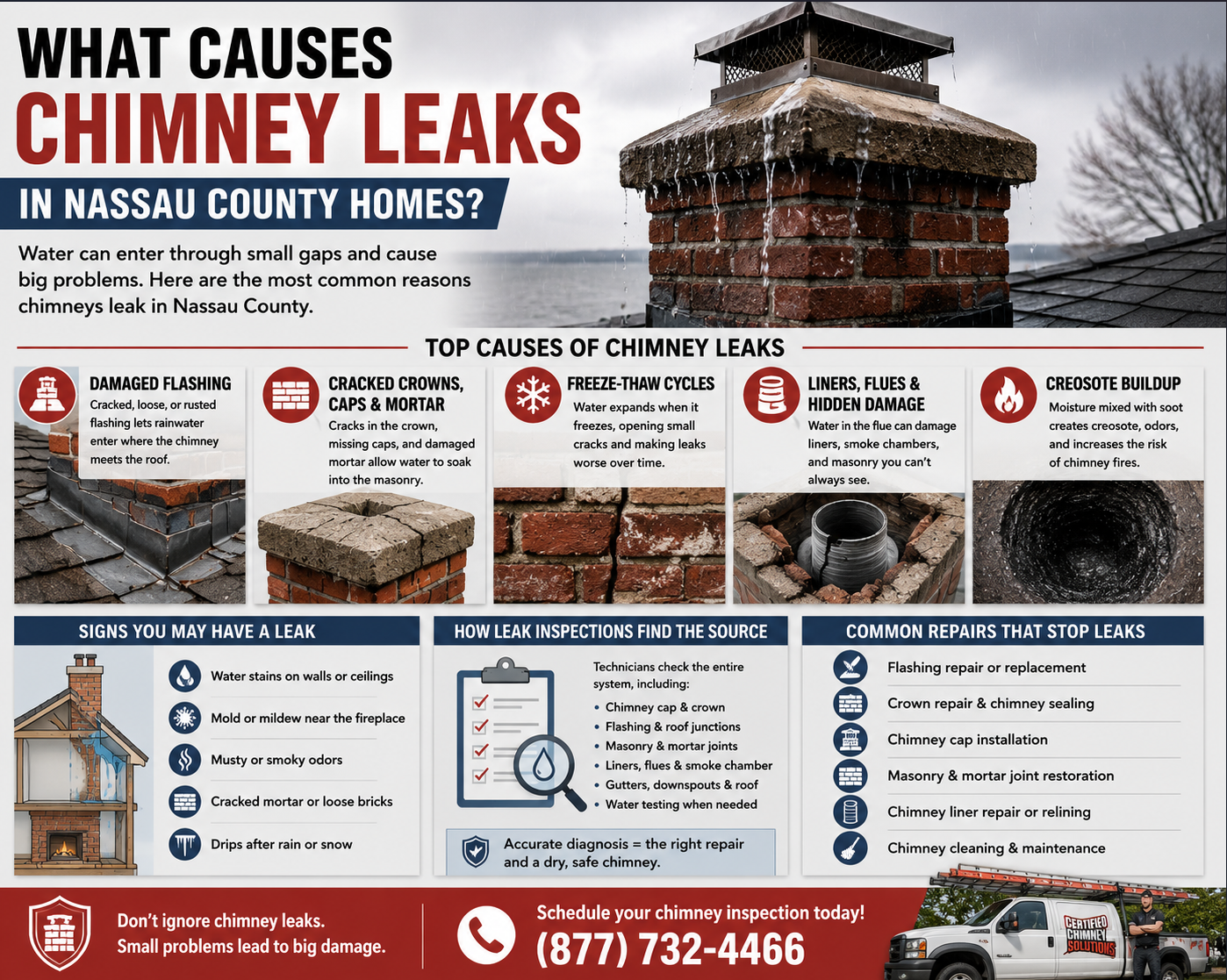
Chimney leaks in Nassau County homes are often caused by water entering through weak flashing, cracked crowns, damaged mortar joints, or missing chimney caps. Long Island weather can make these problems worse because homes deal with salt air, horizontal rain, winter ice, and freeze-thaw cycles. When water enters the chimney system, it can stain walls, damage the smoke chamber, weaken masonry, and create mold growth. Over time, small water leaks can lead to structural damage, chimney repair needs, and higher fire safety concerns. Certified Chimney Solutions provides local chimney leak repair and chimney services across Nassau County and Long Island.
Damaged Chimney Flashing
Chimney flashing is the metal seal where the chimney meets the roof. When flashing cracks, lifts, rusts, or separates from the roof surface, rainwater can enter at the roof junction. This can look like a roof leak, but the real problem may be cracked flashing around the chimney. Flat roofs, older shingles, rubber boot areas, and nearby roof penetrations can also make leak diagnosis more confusing. Flashing replacement or chimney flashing repair helps stop water intrusion at one of the most common leak points. A chimney inspection can confirm whether the leak is coming from the chimney or the roof.
Cracked Crowns, Caps, and Masonry Damage
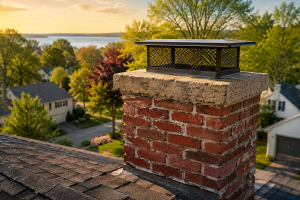
The chimney crown and chimney cap help protect the top of the chimney from rain, snow, animals, and debris. When the crown cracks or the cap is missing, water can enter the flue and soak the masonry below. Nassau County homes near the South Shore, North Shore, and Long Island Sound can see faster wear because salt air and storms affect exposed masonry. Damaged mortar, cracked crowns, and loose brick can let water move deeper into the chimney system. Crown repair, chimney sealing, masonry crack repairs, and crown and cap repairs can help stop damage before it spreads.
Why Freeze-Thaw Cycles Make Leaks Worse
Freeze-thaw cycles make chimney leaks worse because trapped water expands when it freezes. That pressure can open small cracks in mortar joints, brick, flashing, and the chimney crown. When the ice melts, more water can enter those gaps during the next storm. This repeated cycle can turn minor masonry damage into structural problems over time. In Nassau County and Suffolk County, winter weather can be hard on masonry chimneys because moisture, ice dams, and wind-driven rain often arrive in the same season. Mortar joint restoration and waterproofing treatments can help protect the chimney after the leak source is fixed.
Chimney Liners, Flues, and Hidden Water Damage
Chimney liners and flues can also show signs of hidden water damage. When water travels down the chimney flue, it can damage clay liners, stainless steel liner systems, oil burner flues, and the smoke chamber. If the chimney also has creosote buildup, water can mix with soot and create strong odors or dark staining. Over time, this can affect draft, fireplace repair needs, and carbon monoxide ventilation. The National Fire Protection Association publishes standards for chimneys, fireplaces, vents, and appliances, which supports proper inspection, maintenance, and repair of chimney systems.
Creosote Buildup and Fire Hazards
Creosote buildup can make a leaking chimney more dangerous. Moisture can combine with soot and creosote deposits inside the flue, creating odors, staining, and acidic residue. If heavy deposits remain in the chimney, they can increase fire hazards when the fireplace is used. The EPA Burn Wise program explains that cleaner burning practices and proper appliance maintenance can reduce creosote buildup and support better air quality. Professional cleaning with rotary brushes and a HEPA-filtered vacuum helps remove buildup so a technician can inspect the flue, liner, and masonry more clearly.
How Chimney Leak Inspections Find the Source
Chimney leak inspections help identify the real source before repairs begin. A technician may check the chimney cap, crown, flashing, mortar joints, masonry surface, chimney liners, roof junctions, gutters, downspouts, and nearby roof penetrations. Water testing may be used when the leak path is hard to find. This matters because water stains inside the home can come from chimney flashing, cracked crowns, roof leaks, gutter issues, or roofing deterioration. A proper leak diagnosis helps avoid the wrong repair. The Chimney Safety Institute of America offers homeowner resources that support regular chimney inspection and safer venting care.
Schedule Chimney Leak Repair in Nassau County
Certified Chimney Solutions provides chimney leak repair, chimney inspection, chimney cleaning, chimney repair, masonry repair, chimney flashing repair, crown repair, chimney sealing, flue cleaning, chimney liners, fireplace repair, and related chimney services across Nassau County and Long Island. Homeowners should schedule service if they notice water stains, mold growth, smoke odors, damaged mortar, cracked flashing, or signs of water intrusion after a storm. The CDC warns that blocked chimneys can allow carbon monoxide to build up indoors, so chimney problems should not be ignored. Call Certified Chimney Solutions at 877-732-4466 for local leak repair help.
Schedule Free Estimate Now!
Free Estimates for residential & commercial