How Often Should You Clean a Chimney in Nassau County NY
Table of Contents
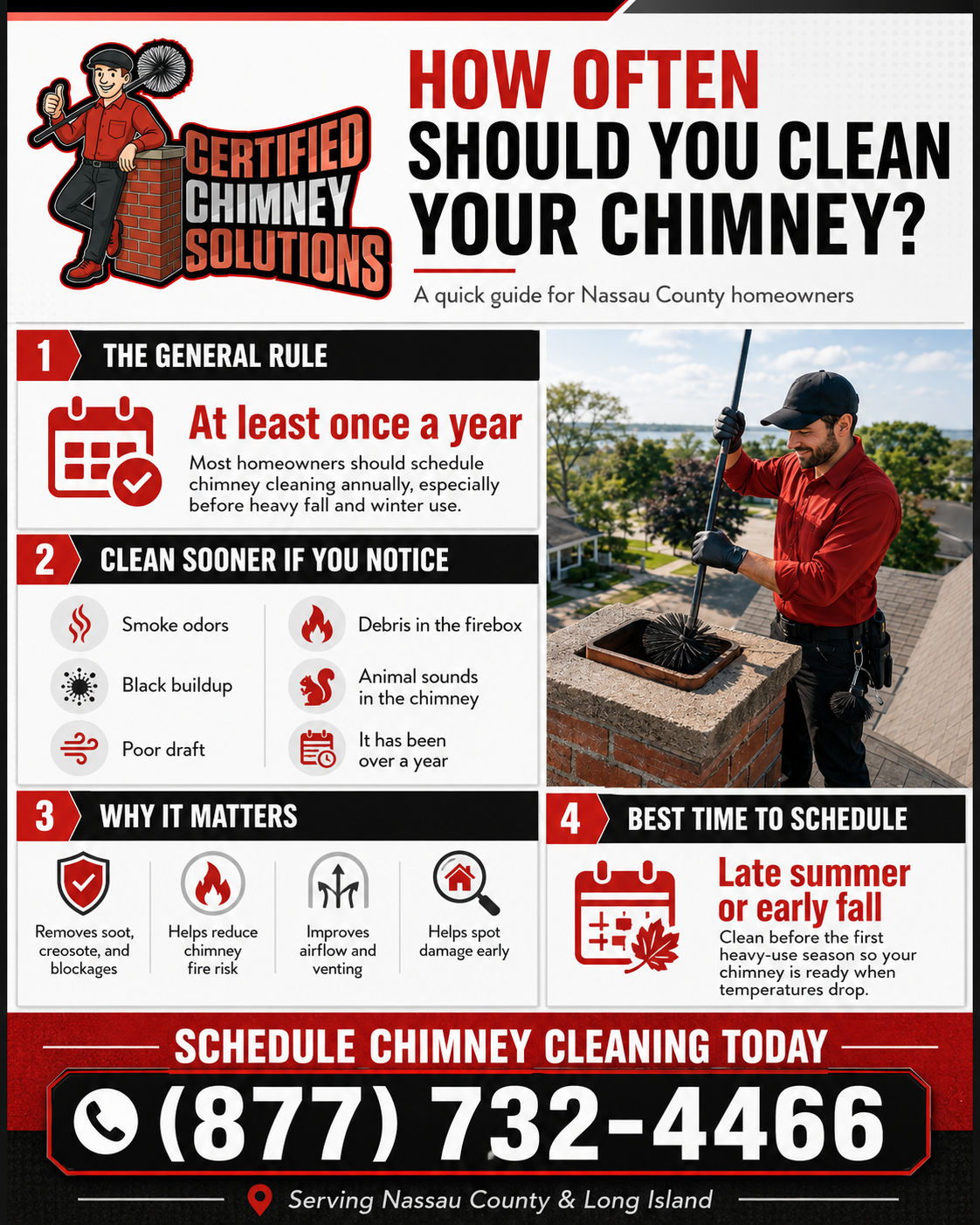
Most Nassau County homeowners should schedule chimney cleaning at least once a year, especially if they use a wood-burning fireplace during fall and winter. A yearly chimney sweep helps remove soot, creosote, debris, and blockages from the flue before they create smoke problems, fire risks, or ventilation concerns.
That said, chimney cleaning is not always one-size-fits-all. A fireplace used every weekend may need service sooner than one used only a few times per season. Homes across Long Island also deal with salt air, coastal rain, freeze-thaw cycles, animal activity, and long stretches of fireplace inactivity, all of which can affect the chimney system.
Why Annual Chimney Cleaning Matters
Chimney cleaning helps keep the flue open and clear so smoke, gases, and combustion byproducts can exit the home properly. When soot, ash, leaves, nesting material, or creosote build up inside the chimney, the fireplace may not draft the way it should.
Creosote is one of the biggest reasons chimney cleaning matters. It forms when wood smoke cools and leaves residue inside the flue lining. Over time, that residue can become thick, sticky, flaky, or hardened. If enough creosote collects, it can increase the risk of a chimney fire.
The U.S. Fire Administration recommends having chimneys and heating equipment cleaned and inspected each year by a professional as part of home heating fire prevention.
Annual cleaning is also a chance to spot early problems. A chimney sweep may notice cracked clay tile liners, a damaged damper, loose masonry, a missing chimney cap, water staining, or signs that the fireplace needs a closer inspection.
How Often Should a Chimney Be Professionally Cleaned?
For most homeowners, once a year is the safest general schedule. The best time is usually late summer or early fall, before the first heavy fireplace use of the season. This gives you time to clean the chimney, handle repairs, and make sure the system is ready before colder weather arrives.
You may need chimney cleaning more often if:
- You burn wood frequently
- You use the fireplace several times per week
- You burn unseasoned or damp wood
- You notice smoke entering the room
- You smell strong fireplace odors
- You see black buildup in the firebox
- You hear animals or birds in the chimney
- Debris falls into the fireplace
- Your chimney has not been cleaned in over a year
The National Fire Protection Association also advises that chimneys and heating systems should be inspected and cleaned each year before they are used for the season. This is especially important for homes that rely on fireplaces, wood stoves, gas appliances, or oil heating systems.
What Happens If a Chimney Goes Too Long Without Cleaning?
A chimney can sometimes go years without obvious symptoms, but that does not mean it is safe. Buildup and damage often develop quietly. By the time smoke backs into the room or water stains appear near the fireplace, the problem may already be more serious.
A chimney that goes too long without cleaning can develop:
- Heavy creosote buildup
- Poor draft and smoke backup
- Clogged flue passages
- Animal nests or debris blockages
- Strong odors from moisture and soot
- Higher chimney fire risk
- Carbon monoxide ventilation concerns
- Rusted dampers or firebox components
- Masonry damage caused by trapped moisture
The risk is not only about fireplace use. Even if you rarely burn wood, animals, leaves, rain, and deteriorating masonry can still affect the flue. A chimney cap can help reduce debris and animal entry, but it does not replace professional cleaning and inspection.
If your chimney has not been cleaned in several years, schedule service before using the fireplace again.
Nassau County Weather Can Change Your Cleaning Schedule
Nassau County homes deal with chimney conditions that are different from drier inland areas. Coastal moisture, salt air, winter freezing, spring rain, and summer humidity can all affect chimney performance.
Homes near Oyster Bay, Massapequa, Freeport, Long Beach, Garden City, Uniondale, Mineola, Hicksville, and the Gold Coast may see moisture-related chimney concerns such as rust, masonry wear, damper damage, and odors. In winter, freeze-thaw cycles can make small cracks in brick, mortar, crowns, and flashing worse.
Moisture can also mix with soot and creosote, creating stronger fireplace smells and making buildup harder to ignore. If you notice odor after rain, dampness in the firebox, white staining on the brick, or rust around the damper, schedule a chimney inspection along with cleaning.
The Chimney Safety Institute of America explains that annual chimney inspections can help identify issues before they become costly and can help reduce risks involving chimney fires and carbon monoxide intrusion.
Chimney Cleaning Cost, Mess, and DIY Questions
Homeowners often ask about the average cost of having a chimney swept. The price can vary based on chimney height, access, buildup level, fireplace type, whether there are animals or blockages, and whether an inspection or repair recommendation is needed. A simple cleaning is usually different from a chimney cleaning with video inspection, liner evaluation, animal removal, or masonry repair.
Another common concern is mess. Professional chimney sweeps use tools and containment methods designed to protect the home during cleaning. Depending on the setup, this may include coverings, brushes, and vacuum equipment such as a HEPA-filtered vacuum.
Can you clean your own chimney to save money? Light fireplace cleanup is one thing, but chimney sweeping is more involved. The flue may contain heavy creosote, cracked liners, hidden blockages, or venting problems that are difficult to evaluate without professional tools. A DIY cleaning can also miss safety concerns that a trained chimney technician would know to look for.
The 3:2-10 chimney rule is another common homeowner question, but it relates to chimney height and draft, not cleaning frequency. In general, a chimney should extend high enough above the roof and nearby structures to support safer venting. If your chimney drafts poorly or smoke comes back into the home, that should be checked during an inspection.
Schedule Chimney Cleaning in Nassau County NY
If your fireplace has not been cleaned in over a year, or if you notice smoke, odor, debris, poor draft, or signs of moisture, Certified Chimney Solutions can help. Our team provides chimney cleaning, chimney sweep service, chimney inspections, creosote and soot removal, chimney repair support, chimney cap service, liner evaluations, and fireplace maintenance throughout Nassau County, NY.
Regular chimney cleaning helps keep the flue clearer, reduces avoidable risks, and gives homeowners a better understanding of the chimney system’s condition before the next burning season.
Contact Certified Chimney Solutions today to schedule chimney cleaning in Nassau County, NY, and keep your fireplace cleaner, safer, and ready for use.
Schedule Free Estimate Now!
Free Estimates for residential & commercial