Why Coastal Moisture Damages Long Island Chimneys
Table of Contents
Long Island chimneys deal with more moisture than many homeowners realize. Coastal rain, salt air, humidity, winter freeze-thaw cycles, strong winds, and storms can slowly wear down brick, mortar, flashing, chimney crowns, caps, and liners. Even when a chimney looks solid from the ground, moisture can be moving through small cracks and weak joints inside the system.
For homeowners in Nassau County, Suffolk County, the Gold Coast, Oyster Bay, Massapequa, Long Beach, Huntington, and coastal Long Island communities, chimney maintenance is not just about fireplace use. It is also about protecting masonry from the local climate. Certified Chimney Solutions helps homeowners identify water damage, repair weak areas, and prevent coastal moisture from shortening the life of the chimney.
Long Island’s Coastal Climate Puts Chimneys Under Pressure
Long Island is surrounded by water, with the Atlantic Ocean to the south, Long Island Sound to the north, and bays, inlets, salt marshes, and coastal wetlands throughout the region. That means chimneys are regularly exposed to humid air, wind-driven rain, saltwater influence, and fast-changing weather.
New York State notes that communities are already experiencing worsening climate impacts, including increased flooding from extreme storm events and rising sea levels. That broader coastal pressure matters for Long Island homes because more moisture in the environment often means more stress on exterior materials like masonry, mortar, roofing, flashing, and chimney components.
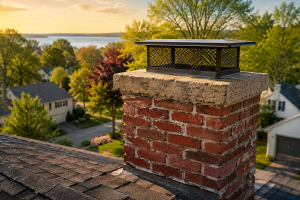
A chimney sits above the roofline, fully exposed. It takes the first hit from rain, snow, wind, ice, UV exposure, and salt air. Over time, that exposure can break down materials that were once strong.
Common coastal chimney stressors include:
- Wind-driven rain
- Salt air and coastal moisture
- Freeze-thaw cycles
- Storm surge and coastal flooding in vulnerable areas
- Ice buildup
- UV exposure
- High humidity
- Moss and algae growth
- Poor roof drainage or gutter leaks
How Moisture Breaks Down Brick, Mortar, and Masonry
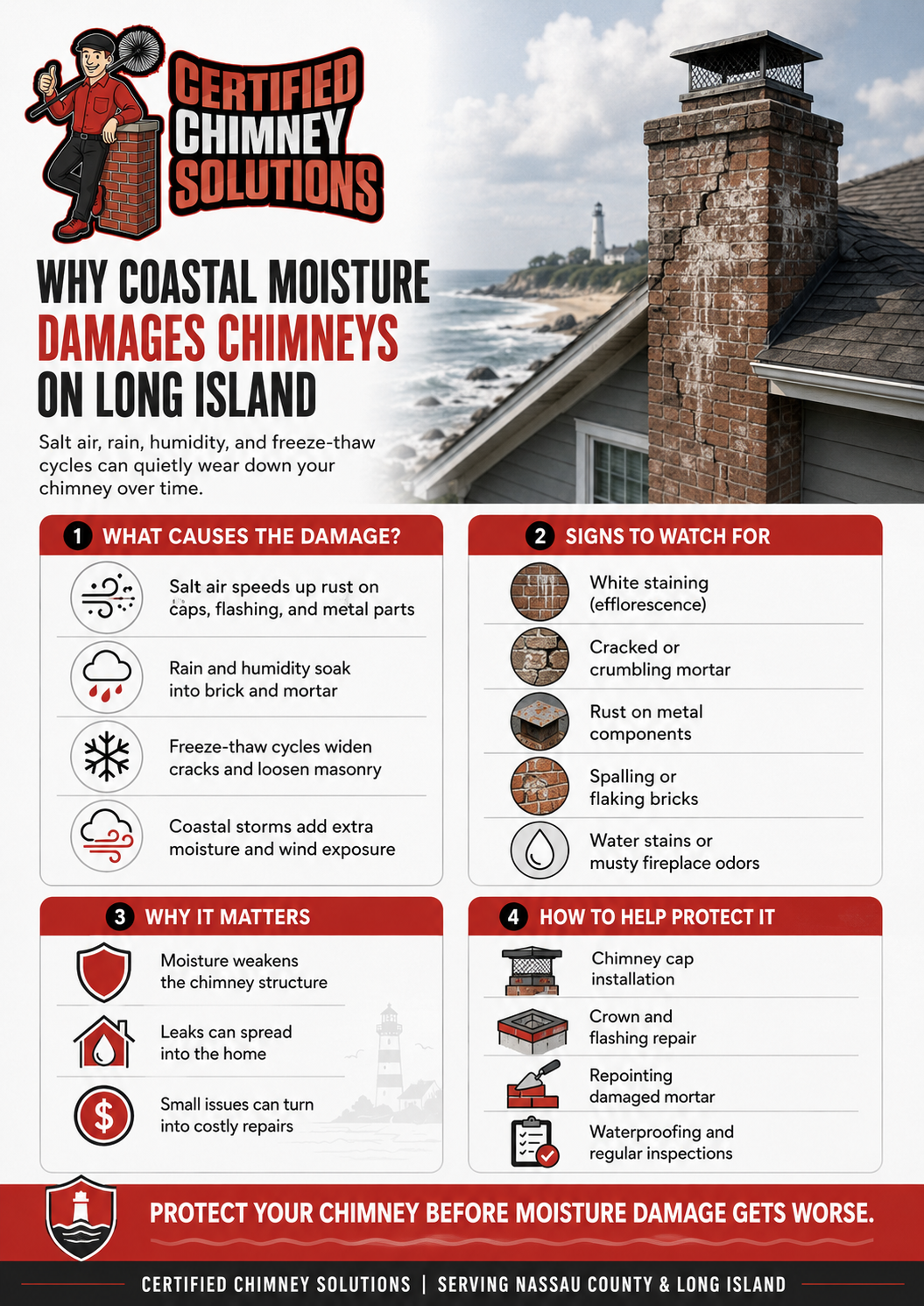
Masonry looks tough, but it is porous. Brick and mortar can absorb moisture, especially when they are older, cracked, unsealed, or already deteriorating. Once water enters the masonry, it can move through small openings and weaken the chimney from the inside out.
In winter, moisture becomes even more damaging. Water inside small cracks can freeze and expand. When it thaws, the material contracts again. This repeated freeze-thaw cycle can widen cracks, loosen mortar joints, and cause spalling bricks. Spalling happens when the face of the brick flakes, chips, or breaks away.
Moisture can also cause efflorescence, which appears as white staining on the outside of the chimney. While the stain itself is mineral residue, it often points to water moving through the masonry.
If ignored, moisture damage can lead to:
- Cracked mortar joints
- Spalling bricks
- Loose masonry
- Leaks near the fireplace
- Damaged chimney crowns
- Rusted dampers
- Weakened chimney structure
- Drafting problems
- Higher chimney repair costs
The problem usually starts small. A hairline crack in a crown, a missing chimney cap, or a weak mortar joint can allow water into the chimney system. After one or two winters, the damage can look much worse.
Salt Air, Storms, and Flashing Problems
Salt air can speed up wear on metal chimney components. Chimney caps, chase covers, flashing, dampers, and metal liners may corrode faster when exposed to salty coastal air and moisture. Homes closer to the water may see this more often, but salt and humidity can still affect properties farther inland.
Flashing is one of the most common sources of chimney leaks. It seals the area where the chimney meets the roof. When flashing pulls away, rusts, cracks, or was installed poorly, rain can enter at the roofline and travel into the home.
A chimney leak does not always show up directly under the chimney. Water may move along framing, masonry, insulation, or ceiling materials before a homeowner notices a stain. That is why leak diagnosis should include the chimney crown, cap, flashing, brickwork, mortar joints, and roof drainage.
NOAA’s Sea Level Rise Viewer explains that as sea levels increase, some coastal wetlands and low-lying areas may change or become more frequently inundated. While that does not mean every Long Island home faces the same risk, it does show why coastal moisture, flooding, and storm exposure remain important regional concerns for property maintenance.
Chimney Crowns, Caps, and Flue Openings Need Protection
The top of the chimney is one of the most vulnerable areas. A chimney crown should direct water away from the flue and the masonry below. When the crown cracks, thins out, or lacks proper slope, water can sit on top and seep into the structure.
The chimney cap protects the flue opening. Without a cap, rain, snow, leaves, animals, and debris can enter the chimney. Moisture inside the flue can mix with soot and creosote, creating odor, corrosion, and venting problems. A missing cap also increases the chance of birds, squirrels, or raccoons entering the system.
Flue openings need to remain clear and protected. Blockages, damaged caps, and liner issues can affect drafting efficiency and safety. A chimney that has moisture damage may also have a damaged flue liner or rusted damper that needs inspection.
For coastal Long Island homes, stainless steel chimney caps, quality chase covers, professional crown repair, and proper flashing can make a noticeable difference. These components help reduce direct water entry and protect the chimney from repeated exposure.
Waterproofing and Repointing Help Prevent Long-Term Damage
Chimney waterproofing can help protect masonry from absorbing excess moisture. A professional-grade, vapor-permeable waterproof sealant is often recommended because it helps repel water while still allowing trapped moisture inside the masonry to escape. Using the wrong product can trap moisture and make deterioration worse.
Repointing, also called tuckpointing, repairs deteriorated mortar joints between bricks. When mortar wears away, water can enter more easily. Repointing removes damaged mortar and replaces it with new material designed to restore the joint and protect the chimney structure.
These services are often recommended when a chimney shows signs of moisture wear but does not yet need major rebuilding. The goal is to stop water intrusion early, strengthen weak areas, and extend the life of the masonry.
Professional moisture protection may include:
- Chimney waterproofing
- Repointing or tuckpointing
- Chimney crown repair
- Chimney cap installation
- Flashing repair
- Chase cover replacement
- Masonry repairs
- Gutter or roof drainage recommendations
- Flue liner inspection
The New York State Climate Impacts Assessment notes that low-lying coastal areas in New York face increased flood risk as sea levels rise, and Long Island’s coastline is projected to see significant sea level rise by the end of the century. For homeowners, this reinforces the importance of staying ahead of exterior moisture problems before they become structural issues.
Signs Coastal Moisture Is Damaging Your Chimney
Moisture damage is not always dramatic at first. Many homeowners notice small clues and assume they are cosmetic. But on a chimney, small signs of water intrusion can point to larger problems inside the masonry or flue.
Watch for these warning signs:
- White staining on exterior brick
- Cracked or crumbling mortar
- Flaking or spalling bricks
- Rust on the damper, cap, or chase cover
- Water stains near the fireplace
- Musty chimney odors
- Moss or algae growth
- Loose flashing
- Cracked chimney crown
- Smoke or draft problems
- Debris falling into the firebox
- Leaning or shifting chimney masonry
If the chimney smells worse after rain, moisture may be entering the flue or masonry. If the fireplace has rusted metal parts, water is getting into places it should not. If bricks are flaking, the chimney may already be absorbing and releasing moisture through repeated weather cycles.
The U.S. Geological Survey notes that coastal flooding and storm-related damages are increasing with sea level rise globally, with regional differences in impact. Long Island’s coastal setting makes moisture-aware home maintenance especially important.
Schedule Long Island Chimney Moisture Protection
Coastal moisture can quietly damage a chimney long before major repairs are obvious. Regular inspections, chimney waterproofing, flashing repair, chimney cap installation, crown repair, and repointing can help protect the structure from Long Island’s wet, salty, storm-prone climate.
Certified Chimney Solutions provides chimney inspections, chimney repair, chimney waterproofing recommendations, masonry repairs, chimney repointing, flashing repair, chimney crown repair, chimney cap installation, chimney liner evaluations, and related chimney services for homeowners across Nassau County and Long Island.
If your chimney has stains, cracks, rust, leaks, odors, or signs of moisture damage, schedule service before the next round of rain, snow, or freezing weather makes the issue worse. Contact Certified Chimney Solutions today to protect your Long Island chimney from coastal moisture and request a free estimate.
Schedule Free Estimate Now!
Free Estimates for residential & commercial