Signs Your Nassau County Chimney Needs Repair
Table of Contents
Why Pre-Winter Chimney Repair Matters in Nassau County
Winter is hard on chimneys. When water enters small cracks in brick, mortar, flashing, or the chimney crown, freezing temperatures can cause that moisture to expand. This freeze-thaw movement can widen cracks, loosen bricks, damage mortar joints, and make existing chimney repairs more expensive.
Nassau County homes also deal with coastal moisture, salt air, heavy rain, and strong winds. Homes closer to the North Shore, South Shore, and Gold Coast may experience faster wear on exposed masonry and metal components. A chimney that already has minor water damage in October may show bigger leaks, staining, smoke problems, or structural issues by February.
A pre-winter inspection can help identify signs of chimney damage before the fireplace is used heavily. The U.S. Fire Administration recommends having chimneys and heating equipment cleaned and inspected each year by a professional as part of home heating fire prevention. This annual maintenance is especially important before the colder months, when fireplaces and heating systems see more use.
Professional chimney repair before winter may help prevent:
- Water leaks near the fireplace
- Loose or spalling bricks
- Cracked chimney crowns
- Damaged mortar joints
- Smoke backup into the home
- Flue blockages
- Carbon monoxide concerns
- Chimney fire risks
- Higher repair costs after winter damage
Visible Signs Your Chimney Needs Repair
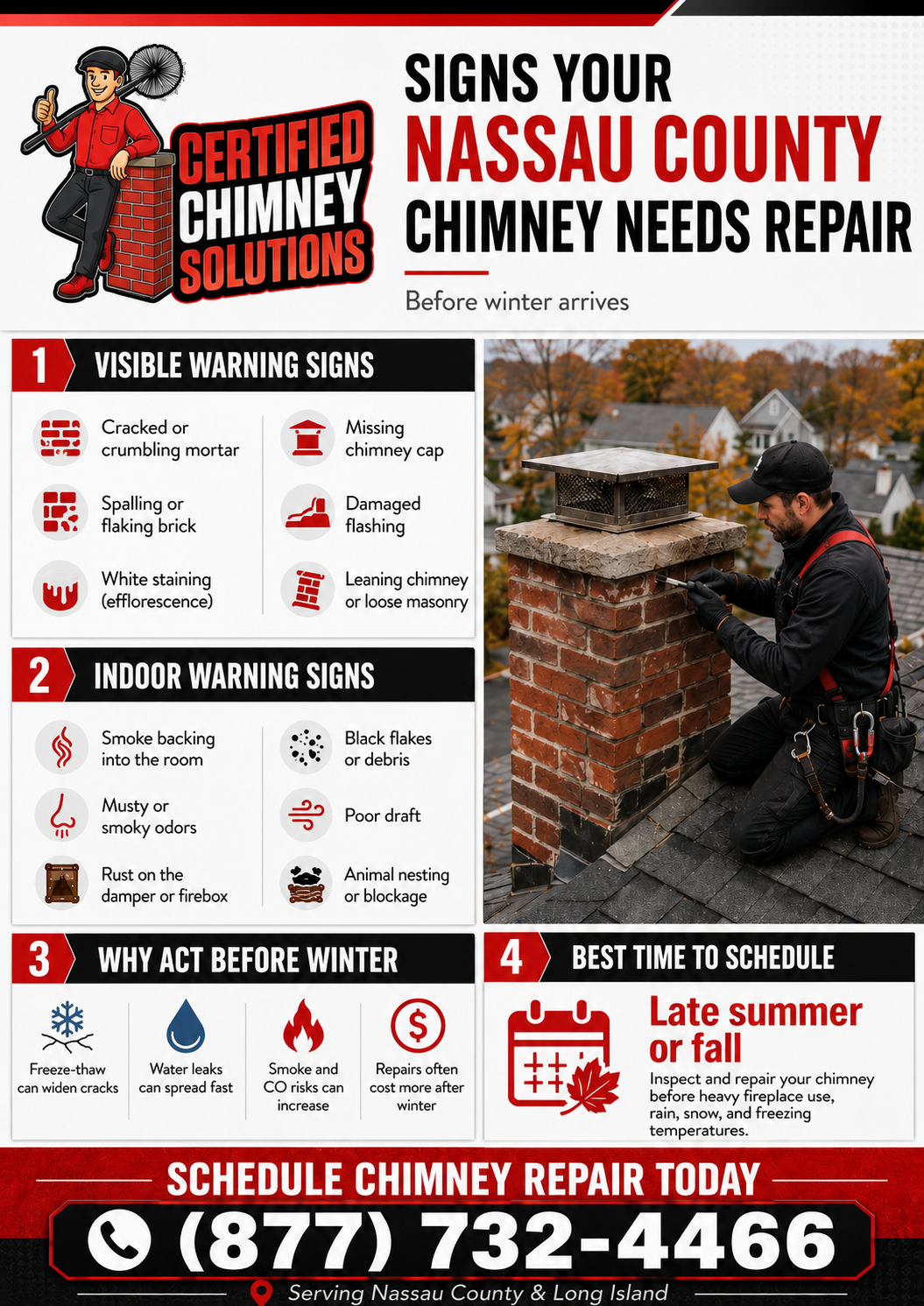
Some chimney problems can be seen without special equipment. Walk outside and look at the chimney from a safe distance. You do not need to climb onto the roof to spot many early warning signs.
Look for cracked bricks, missing mortar, leaning sections, white staining, rust marks, loose flashing, or a missing chimney cap. White staining, also called efflorescence, usually means water has moved through the masonry and left mineral deposits behind. It may look cosmetic, but it often points to a moisture problem.
Spalling brick is another warning sign. This happens when the face of the brick flakes, chips, or breaks away. On Long Island chimneys, spalling often develops when moisture enters the masonry and expands during freezing weather. Once brick surfaces begin to break down, the chimney can lose strength over time.
Pay attention to the chimney crown too. The crown sits at the top of the chimney and helps shed water away from the flue and masonry. If the crown is cracked, thin, deteriorated, or missing proper slope, water can settle and enter the chimney structure.
You may need chimney repair if you notice:
- Cracked or crumbling mortar
- Bricks flaking, chipping, or falling apart
- White staining on the chimney exterior
- Rust around the cap, chase cover, or flashing
- A missing or damaged chimney cap
- Gaps where the chimney meets the roof
- A leaning chimney stack
- Pieces of masonry on the roof or ground
- Water stains on ceilings or walls near the fireplace
These issues should be checked before winter. Once snow, ice, and freezing temperatures arrive, some masonry and flashing repairs may become more difficult to complete.
Fireplace, Smoke, Odor, and Flue Warning Signs
Not every chimney repair warning sign is visible from the outside. Some of the most important clues show up inside the home.
If smoke enters the room when you use the fireplace, the chimney may have a draft problem, flue blockage, closed or damaged damper, creosote buildup, or improper venting issue. Smoke backup should not be treated as normal. It can signal that the chimney is not moving smoke and gases out of the home properly.
Strong fireplace odors are another clue. A smoky, musty, or sour smell may be caused by creosote, moisture, animal debris, or poor airflow. Odors often get worse during damp weather or when the home’s air pressure pulls chimney smells inside.
Rust is also a concern. If you see rust on the damper, firebox, fireplace doors, or metal chimney components, moisture is entering the system. Water inside the fireplace system can damage metal parts, stain masonry, and contribute to flue deterioration.
Inside the fireplace or flue, warning signs may include:
- Smoke backing into the room
- Strong odors after rain
- Rust on the damper or firebox
- Black flakes or debris falling into the fireplace
- Poor draft when starting a fire
- Animals, birds, or nesting material in the chimney
- Chilly drafts coming from the fireplace
- Cracked firebox panels or damaged mortar
- Signs of creosote buildup
The National Fire Protection Association notes that heating systems and chimneys should be cleaned and inspected annually by a qualified professional, and that home heating fires peak during winter months. That makes fall a smart time to handle chimney cleaning, inspection, and repair before the fireplace becomes part of your regular routine.
Chimney Leaks, Masonry Damage, and Winter Weather Risks
Water is one of the biggest enemies of a chimney. A leak may start at the flashing, crown, cap, masonry joints, chase cover, or cracked brickwork. Once water enters, it can move through the chimney system and show up as stains near the fireplace, peeling paint, ceiling damage, or musty odors.
Chimney leaks can be difficult for homeowners to diagnose because the visible stain is not always directly below the entry point. Water may travel along framing, masonry, or the outside of the flue before it appears inside the home. That is why a chimney inspection is important before assuming the leak is only a roof issue.
Winter makes moisture problems worse. Water that enters small masonry cracks can freeze, expand, and push bricks or mortar apart. This can lead to wider cracks, loose bricks, spalling, and eventually larger chimney repairs.
Common moisture-related repairs include chimney repointing, tuckpointing, crown repair, flashing repair, cap replacement, chase cover replacement, waterproofing, and masonry repairs. In some cases, cracked flue tiles or damaged liners may also need attention.
The New York State Department of State explains that New York’s building standards and codes are intended to support safe, resilient, and energy-efficient buildings. When chimney repairs involve structural masonry, venting, liners, or fireplace components, following proper standards matters for both safety and long-term performance.
For Nassau County homeowners, the best time for chimney repair is often before harsh weather arrives. Fall repairs can help reduce the risk of emergency service during winter, when moisture, ice, and fireplace use may make problems more urgent.
What About Chimney Repair Cost and the 3:2-10 Rule?
Homeowners often ask about the average chimney repair cost. The truth is that pricing depends on the type of damage, chimney height, access, materials, labor, and how much of the system needs repair. A small mortar repair is very different from a full chimney rebuild, stainless steel liner installation, extensive flashing work, or structural masonry repair.
Insurance may help in certain situations, but it depends on the cause of the damage. Sudden storm damage may be handled differently than long-term deterioration, neglected maintenance, or age-related wear. If the chimney damage may be related to a covered event, take photos, schedule an inspection, and contact your insurance provider for guidance.
Another common question is the 3:2-10 rule for chimneys. This rule generally means a chimney should extend at least 3 feet above the roof where it passes through and at least 2 feet higher than any part of the building within 10 feet. This height helps support proper draft and reduce fire safety concerns. If your chimney appears too short, drafts poorly, or has smoke problems, it should be evaluated by a chimney professional.
The Chimney Safety Institute of America describes its Certified Chimney Sweep credential as a nationally recognized measure of a chimney and venting technician’s knowledge of chimney and venting system evaluation and maintenance. For homeowners, that reinforces why chimney repair, inspection, and sweeping should be handled by trained professionals rather than guessed at from the ground.
Before approving chimney repair, ask what the inspection found, which components are affected, what materials will be used, and whether the repair is meant to solve water intrusion, draft, masonry deterioration, liner damage, or code-related concerns. Good chimney repair starts with identifying the real cause of the problem.
Schedule Chimney Repair Before Winter in Nassau County NY
If your chimney is leaking, cracking, smoking, smelling musty, showing rust, or dropping debris into the fireplace, do not wait until winter makes the problem worse. Certified Chimney Solutions provides chimney inspections, chimney repair service, chimney sweep service, masonry repairs, chimney repointing, flashing repair, chimney cap replacement, flue evaluations, and pre-winter chimney maintenance throughout Nassau County, NY.
A safe, reliable chimney depends on more than a clean fireplace. The bricks, mortar joints, crown, flashing, damper, flue lining, cap, and chimney structure all need to work together. When one part fails, the system can become vulnerable to water damage, smoke problems, draft issues, and safety risks.
Contact Certified Chimney Solutions today to schedule chimney repair in Nassau County before winter. A timely inspection and repair plan can help protect your home, extend the life of your chimney, and give you more confidence before the first fire of the season.
Schedule Free Estimate Now!
Free Estimates for residential & commercial