Chimney Inspection vs Cleaning Nassau County NY
Table of Contents
himney inspection and chimney cleaning are closely related, but they are not the same service. A chimney cleaning removes soot, creosote, debris, and blockages from the flue. A chimney inspection checks the condition of the chimney system, fireplace, liner, masonry, damper, flashing, and venting components to find safety concerns or repair needs.
For Nassau County homeowners, both services matter. Long Island homes deal with winter fireplace use, coastal rain, salt air, freeze-thaw cycles, storm damage, and aging masonry. A chimney may need to be cleaned because it has buildup, but it may also need an inspection to identify cracked flue tiles, water damage, draft problems, liner issues, or carbon monoxide risks.
What Is the Difference Between Chimney Cleaning and Chimney Inspection?
A chimney cleaning, often called a chimney sweep, focuses on removing buildup from inside the chimney. This can include soot, ash, creosote, leaves, nesting material, and other debris. Cleaning helps improve airflow and reduces the risk of chimney fires caused by combustible deposits.
A chimney inspection is more diagnostic. The technician is looking for problems, not just removing buildup. This may include checking the flue, masonry, chimney cap, crown, flashing, damper, firebox, smoke chamber, liner, and visible venting connections. If needed, a video camera inspection may be used to look deeper into the flue.
Think of it this way:
- Cleaning answers: “Is the chimney dirty or blocked?”
- Inspection answers: “Is the chimney safe, sound, and working properly?”
The U.S. Fire Administration recommends having chimneys and heating equipment cleaned and inspected each year by a professional as part of home heating fire prevention. That means most homeowners should not see inspection and cleaning as an either-or decision. They work best together.
When Nassau County Homes Need Chimney Cleaning
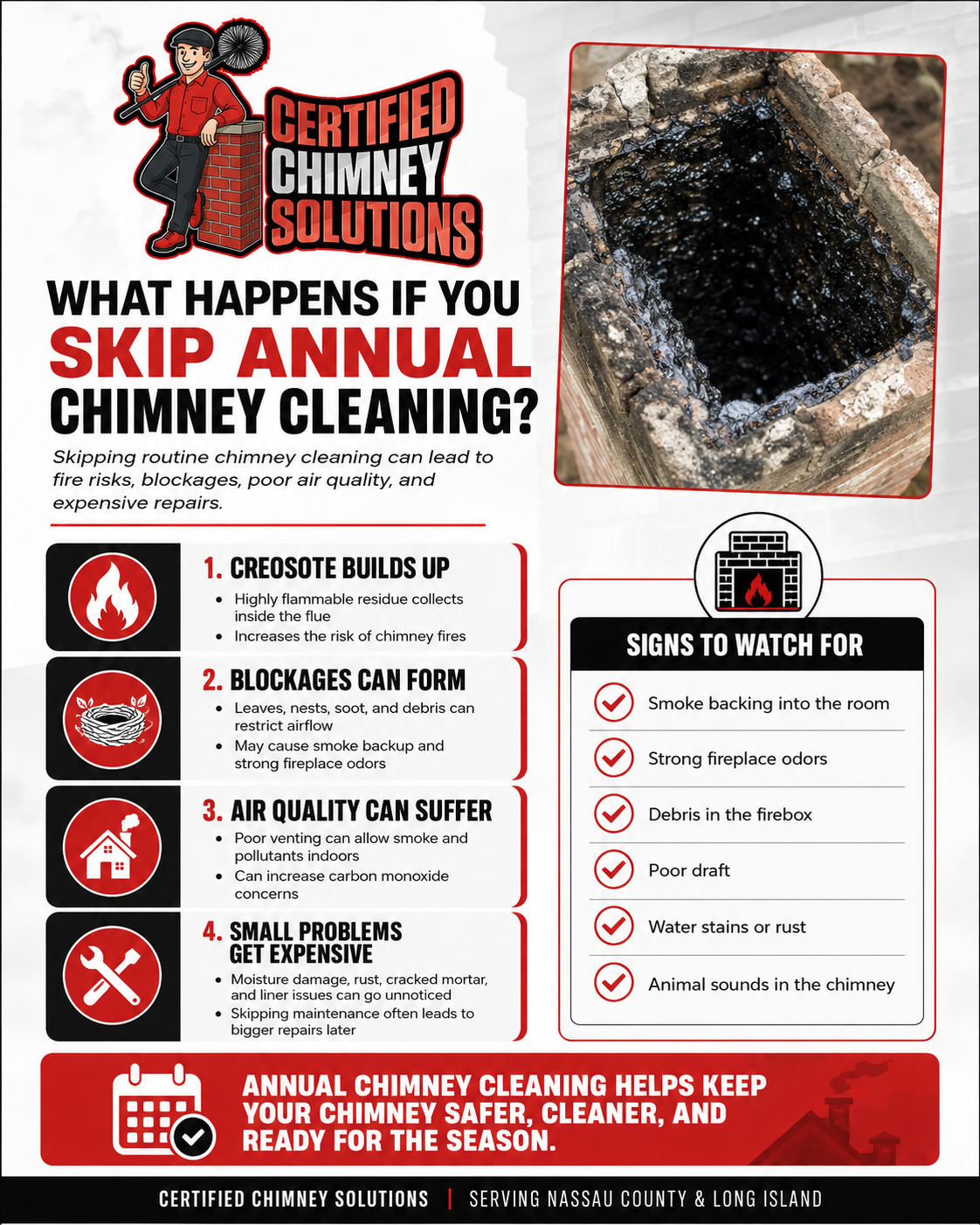
Chimney cleaning is usually needed when soot, creosote buildup, debris, or blockages collect inside the flue. Wood-burning fireplaces are especially prone to creosote because smoke leaves behind residue as it cools inside the chimney. The more often the fireplace is used, the faster buildup can happen.
Common signs your chimney may need cleaning include smoke backing into the room, a strong smoky odor, poor draft, black buildup in the firebox, falling debris, or visible soot near the damper. If birds, squirrels, or other animals entered the chimney, cleaning may also be needed after animal removal.
A cleaning is especially important before heavy fireplace use in fall and winter. In areas like Massapequa, Oyster Bay, Garden City, East Meadow, Mineola, Levittown, Hicksville, and Freeport, many homeowners go months without using the fireplace, then rely on it once colder weather arrives. That gap gives moisture, debris, and animals time to create problems.
Chimney cleaning may also reveal repair issues. Once buildup is removed, a technician may be able to see cracks, missing mortar, liner damage, or water staining that was hidden before.
When a Chimney Inspection Matters More Than a Cleaning
There are times when cleaning alone is not enough. If there is water leaking near the fireplace, rust on the damper, white staining on exterior brick, loose masonry, smoke problems, or a history of chimney fires, the chimney needs a closer inspection.
A chimney inspection is also important before buying or selling a home. A general home inspection may mention the visible chimney, but it does not always include a full chimney system evaluation. That is why many real estate agents and homeowners request a separate fireplace or chimney inspection during a home sale.
According to the Chimney Safety Institute of America, NFPA 211 defines three levels of chimney inspection, and a Level 1 inspection is commonly used for routine annual inspections and routine cleanings when the system has not changed.
A Level 2 inspection is usually more detailed. It may be recommended during a real estate transaction, after a chimney fire, after severe weather, after a change in appliance or fuel type, or when a hidden problem is suspected. This type of inspection often includes a closer look at accessible areas and may include video scanning of the flue.
Level 3 inspections are more involved and are generally reserved for serious structural concerns or suspected hazards that cannot be fully evaluated with Level 1 or Level 2 access.
What a Chimney Inspection Can Find
A chimney inspection can uncover issues that are easy for homeowners to miss. From the ground, a chimney may look solid, but inside the system there may be cracked liners, flue obstructions, deteriorated mortar, loose bricks, damaged flashing, or signs of water intrusion.
For Nassau County homes, moisture is one of the biggest long-term threats. Coastal rain, salt air, and winter freeze-thaw cycles can wear down mortar and brickwork. A small crack in the crown or flashing can allow water into the chimney. Over time, that water can rust the damper, damage the firebox, weaken masonry, and create expensive repair needs.
A chimney inspection may identify:
- Creosote buildup
- Debris or animal nesting material
- Damaged chimney liners
- Cracked flue tiles
- Loose or missing bricks
- Deteriorated mortar
- Damaged chimney caps
- Flashing leaks
- Draft problems
- Smoke chamber damage
- Carbon monoxide concerns
- Signs of prior chimney fires
The National Fire Protection Association has also emphasized that heating systems and chimneys should be cleaned and inspected annually by a qualified professional, especially because home heating fires peak during the winter months.
How to Prepare for a Chimney Inspection or Cleaning
Preparing for chimney service is simple, but it helps the appointment go smoother. Homeowners should avoid using the fireplace for at least 24 hours before the visit so the system is cool. Clear the area around the fireplace, move furniture or decorations away from the hearth, and make sure the technician can access the fireplace, basement utility area, attic access, or roof area if needed.
If you have noticed specific issues, mention them before the inspection begins. For example, tell the technician if you saw smoke backup, smelled gas, noticed water stains, heard animals, or saw debris fall into the fireplace.
For a cleaning, the technician will typically protect the surrounding area, use professional chimney cleaning tools, and remove soot, creosote, and debris from the flue. For an inspection, the technician may check visible components, document findings, and explain whether repairs, cleaning, relining, cap replacement, or further evaluation is needed.
Homeowners often ask about cost. The average price to sweep a chimney on Long Island can vary based on buildup, access, chimney height, condition, and whether inspection or repairs are also needed. A simple cleaning is usually different from a detailed video inspection, chimney liner evaluation, or repair estimate.
Schedule Chimney Cleaning or Inspection in Nassau County NY
If your chimney has not been cleaned or inspected recently, it is worth scheduling service before the next heavy-use season. Cleaning helps remove buildup. Inspection helps identify safety concerns. Together, they give Nassau County homeowners a clearer picture of the chimney system’s condition.
Certified Chimney Solutions provides chimney inspections, chimney cleaning, chimney sweeping, fireplace inspections, video camera inspections, storm damage inspections, chimney repair, chimney liner service, and related chimney maintenance throughout Nassau County, NY.
Whether you live near the Gold Coast, Oyster Bay, Massapequa, Garden City, East Meadow, Hicksville, Mineola, Levittown, Freeport, or another Nassau County community, professional chimney care can help protect your home from fire hazards, water damage, carbon monoxide risks, and costly repairs.
Contact Certified Chimney Solutions today to schedule chimney inspection or chimney cleaning service in Nassau County, NY.
Schedule Free Estimate Now!
Free Estimates for residential & commercial