What Happens If You Skip Annual Chimney Cleaning?
Table of Contents
Skipping annual chimney cleaning may seem harmless, especially if your fireplace looks clean or was not used heavily last winter. But inside the chimney, soot, creosote, debris, moisture, and animal nesting material can build up quietly. By the time smoke backs into the room, odors get stronger, or water stains appear near the fireplace, the problem may already be more serious.
For Nassau County and Long Island homeowners, annual chimney cleaning is part of protecting the fireplace, flue, chimney liner, masonry, chimney cap, damper, and ventilation system. Certified Chimney Solutions helps homeowners keep their chimney systems cleaner, safer, and better prepared for seasonal use.
Creosote Buildup Increases Chimney Fire Risk
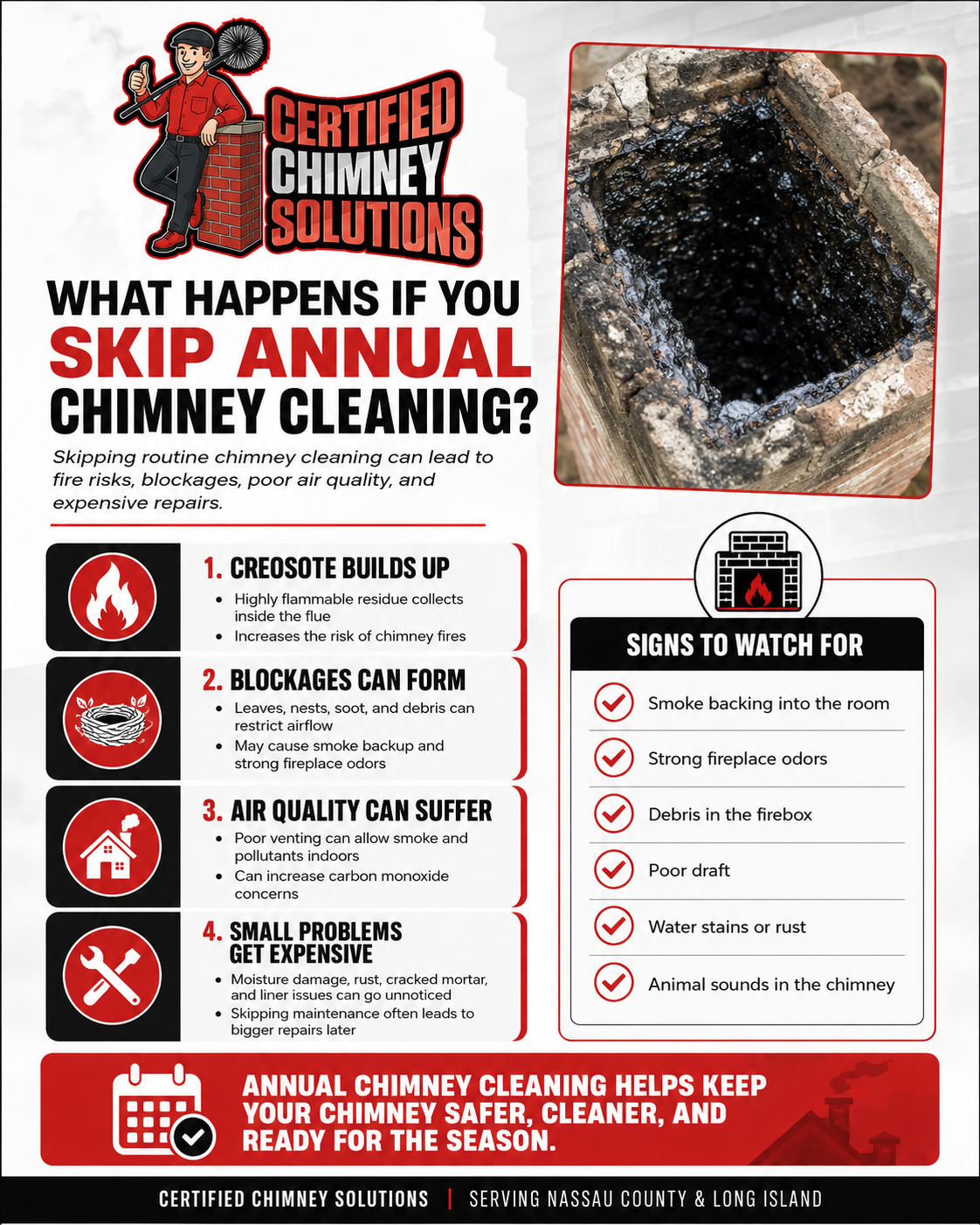
One of the biggest risks of skipping chimney cleaning is creosote buildup. Creosote forms when wood burns and smoke moves through the chimney flue. As the smoke cools, residue sticks to the liner walls. Over time, that buildup can become sticky, flaky, hard, or tar-like.
Creosote is combustible. If enough of it collects inside the flue, a spark or high heat can ignite it and cause a chimney fire. Some chimney fires are loud and obvious, but others burn quickly or quietly and leave behind damage that homeowners may not notice right away.
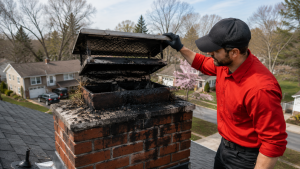
Annual chimney cleaning helps remove creosote before it becomes more dangerous. It also gives the technician a chance to check for cracked flue tiles, damaged chimney linings, loose masonry, blockages, and signs of past overheating.
The U.S. Fire Administration recommends having chimneys and heating equipment cleaned and inspected each year by a professional as part of home heating fire prevention. This yearly habit is one of the simplest ways to reduce avoidable fireplace and heating-related risks.
Blockages Can Cause Smoke, Odors, and Poor Ventilation
A chimney needs a clear path to move smoke, gases, and combustion byproducts out of the home. When cleaning is skipped, the flue can collect more than soot. Leaves, twigs, bird nests, animal debris, broken liner pieces, and moisture-damaged masonry can all create blockages.
A blocked or partially blocked chimney may cause smoke to spill back into the room. You may notice poor draft, trouble starting a fire, smoky smells, or black stains around the fireplace opening. Some homeowners also notice odors that get worse after rain or during humid weather.
Mice, birds, squirrels, and raccoons can enter chimneys when a cap is missing, damaged, or poorly fitted. Once inside, they can leave nesting material that restricts airflow and creates odor problems. A chimney cap helps reduce this risk, but it does not replace annual chimney inspection and cleaning.
Warning signs of chimney blockages include:
- Smoke backing into the living space
- Strong fireplace odors
- Debris falling into the firebox
- Poor draft or slow-starting fires
- Animal sounds in the chimney
- Black staining near the damper or fireplace opening
- A fireplace that smells worse after rain
If any of these signs appear, avoid using the fireplace until the chimney is inspected.
Carbon Monoxide and Air Quality Concerns Can Develop
Skipping chimney cleaning can also affect indoor air quality. A dirty or blocked chimney may not vent properly, which can allow smoke, soot, pollutants, and combustion gases to linger or re-enter the home.
Carbon monoxide is the most serious concern because it cannot be seen or smelled. It can come from fireplaces, gas appliances, oil-fueled appliances, and heating systems when combustion gases do not vent correctly. A chimney with blockages, liner damage, draft problems, or improper ventilation can increase the risk.
The Centers for Disease Control and Prevention explains that carbon monoxide is produced when fuels such as wood, oil, natural gas, propane, and gasoline do not burn completely. Because it is colorless and odorless, working carbon monoxide alarms and proper venting are important for home safety.
Poor chimney maintenance may also contribute to smoke inhalation, soot exposure, and respiratory irritation. If someone in the home has asthma, allergies, or breathing sensitivity, smoke and fireplace odors can become more noticeable when the chimney is dirty or not drafting properly.
A professional chimney sweep does more than remove soot. The service helps identify venting concerns, damaged liners, clogged flues, and other conditions that could affect air circulation inside the home.
Moisture Damage Can Turn Into Expensive Chimney Repairs
Chimney cleaning and inspection are not only about fire safety. They also help catch moisture problems before they cause major damage. When chimney maintenance is skipped, small issues like a cracked crown, missing cap, damaged flashing, or deteriorated mortar may go unnoticed.
Water can enter the chimney system through openings in the crown, cap, flashing, brickwork, or mortar joints. Once inside, moisture can rust the damper, stain the firebox, weaken masonry, damage chimney linings, and create musty odors.
On Long Island, moisture damage is especially common because chimneys face rain, salt air, humidity, snow, and freeze-thaw cycles. When trapped water freezes, it expands. That expansion can widen cracks, loosen bricks, and speed up masonry deterioration.
Damage from skipped maintenance may include:
- Cracked or crumbling mortar
- Spalling bricks
- Rusted dampers or metal components
- Damaged chimney caps
- Crown cracks
- Flashing leaks
- Water stains near the fireplace
- Deteriorated chimney liners
- Masonry repair needs
The National Fire Protection Association advises that chimneys and heating systems should be inspected and cleaned each year before they are used for the season. Annual service helps homeowners find both cleaning needs and repair concerns before winter makes them worse.
Insurance, Cost, and DIY Cleaning Questions
Many homeowners ask how long a chimney can go without cleaning. The safest answer is that a chimney should be inspected every year and cleaned as needed, often annually for wood-burning fireplaces. Even if the fireplace was barely used, the chimney can still develop moisture problems, animal entry, blockages, or liner damage.
Skipping service may also create insurance complications. Homeowners insurance may handle certain sudden covered events, but it usually treats routine cleaning and long-term deterioration differently. If damage is connected to neglect or lack of maintenance, coverage may be limited. Keeping up with annual chimney service can help document that the system was maintained.
The cost of chimney cleaning is usually much lower than the cost of repairing damage caused by years of neglect. Heavy creosote removal, chimney liner replacement, masonry repairs, water damage repairs, or chimney rebuild work can become far more expensive than routine maintenance.
DIY chimney cleaning is another common question. While homeowners can clean ash from the firebox, a full chimney sweep requires the right tools, safety procedures, and knowledge of what to look for. A brush may remove some soot, but it may not reveal cracked flue tiles, damaged liners, hidden blockages, draft problems, or carbon monoxide concerns.
The Chimney Safety Institute of America notes that annual chimney inspections can help identify system issues before they become costly and can help reduce risks involving chimney fires and carbon monoxide intrusion.
Schedule Annual Chimney Cleaning Before Problems Build Up
Annual chimney cleaning helps protect your fireplace, chimney flue, liner, masonry, damper, chimney cap, and home ventilation system. It reduces creosote buildup, helps prevent blockages, supports better draft, and gives homeowners a chance to catch repair issues before they turn into larger problems.
If your chimney has not been cleaned in over a year, or if you notice smoke, odor, debris, moisture, poor draft, or animal activity, Certified Chimney Solutions can help. Our team provides chimney cleaning, chimney inspections, chimney sweep service, creosote removal, chimney repair support, chimney cap service, liner evaluations, and masonry repair recommendations.
Contact Certified Chimney Solutions today to schedule annual chimney cleaning and keep your chimney system safer, cleaner, and ready for the next burning season.
Schedule Free Estimate Now!
Free Estimates for residential & commercial